The global transition to sustainable mobility is moving fast across the United Arab Emirates. From the busy boulevards of Downtown Dubai to the multi-lane highways linking Abu Dhabi and the Northern Emirates, electric vehicles are now a common sight. Yet, as more motorists prepare to make the switch from gasoline or diesel vehicles, important questions arise regarding electric car safety.
Are electric cars safe in high-speed collisions? Do their high-voltage systems increase fire risk under extreme desert heat? Can you safely charge them during seasonal flash floods?
Modern electric cars rely on sophisticated active and passive systems designed to match or exceed the protection of conventional vehicles. This guide examines crash data, battery technology, and environmental defenses to evaluate real-world EV safety on UAE roads.
When assessing whether electric cars' safe designs protect passengers, the data provides clear reassurance. Major testing bodies like Euro NCAP consistently award modern EVs their top safety ratings. Real-world insurance statistics confirm that occupants in an electric vehicle experience lower personal injury rates than travelers in equivalent gasoline or diesel cars.
| Structural Element | Conventional Vehicles (ICE) | Electric Vehicles (EV) |
| Center of Gravity | Higher due to top-heavy engine block | Ultra-low due to floor-mounted battery pack |
| Front Crumple Zone | Constrained by rigid engine block | Expansive and progressive front crumple area |
| Rollover Risk | Moderate | Exceptionally low |
| Fire Likelihood | ~1.5% incident rate across fleet | ~0.0012% incident rate across fleet |
An EV replaces the bulky metal casting of a traditional internal combustion engine with compact electric motors and a heavily reinforced traction battery pack. By mounting heavy electric vehicle batteries along the bottom frame rails between the axles, manufacturers establish an ultra-low center of gravity. This layout improves road-holding performance, sharpens steering response, and significantly reduces the risk of rollover incidents during sudden collision-avoidance maneuvers.
Beyond safety, electric and petrol cars differ in running costs, efficiency, and environmental impact. Read our comparison of electric cars vs petrol cars in the UAE.
Modern electric cars serve as flagships for cutting-edge car safety technology, equipping comprehensive advanced safety features as standard.
| Safety System | Primary Operating Function | Driver Protection Benefit |
| Automatic Emergency Braking (AEB) | Millimeter-wave radar and optical cameras | Detects sudden stops ahead to mitigate or prevent a crash |
| Lane Keeping Assist | Vision sensors tracking road markings | Applies automated steering torque to counter unintentional drift |
| Blind Spot Monitoring | Rear and lateral radar transceivers | Warns drivers of other cars positioned in blind spots |
| Adaptive Cruise Control | Dynamic radar distance-mapping | Regulates vehicle speed to maintain safe highway intervals |
| Battery Management System (BMS) | Digital thermal and voltage sensors | Balances cell voltage and controls temperature |
| Acoustic Vehicle Alerting System (AVAS) | Exterior acoustic sound emitter | Emits a warning hum below 20 km/h to alert pedestrians |
Because an electric motor runs virtually silent at low speed, a quiet vehicle can present challenges for pedestrian safety. Regulatory frameworks—originating from safety standards in regions like the UK—mandate that all new EVs incorporate an Acoustic Vehicle Alerting System (AVAS).
Operating under 20 km/h, AVAS broadcasts an artificial sound to alert distracted pedestrians. Combined with automated braking systems, modern EVs significantly reduce collision risks in urban traffic.
The core of every battery-powered car is its traction pack. Far from sitting vulnerable beneath the floorboards, EV batteries are sealed inside high-strength structural enclosures made from extruded aluminum and ultra-high-strength steel. This rigid protective shell bolts directly into the vehicle's frame, increasing torsional rigidity and shielding the lithium-ion battery cells against road debris, side impacts, and ground punctures.
Managing this hardware is a specialized battery management system (BMS). The BMS continuously measures cell voltage, thermal pressure, and operational status. If the system detects an abnormal spike in temperature, a short circuit, or crash-level deceleration forces, it instantly fires internal pyrofuses. This disconnects the high-voltage circuit within milliseconds, protecting occupants and emergency crews from electrical shock.
Headlines frequently focus on electric vehicle fires, creating the impression that EVs regularly catch fire. However, global records from highway safety institutes and fire services demonstrate that electric car fires occur far less frequently than fires in petrol or diesel vehicles.
Statistical studies show an EV carries approximately a 0.0012% chance of an EV catching fire, compared to roughly 1.5% for an internal combustion engine vehicle. Pressurized fuel lines, exhaust manifolds, and petroleum fuel tanks in traditional ICE cars provide far more volatile ignition sources during a high-speed crash.
| Vehicle Type | Estimated Fire Rate per 100,000 Vehicles | Primary Fire Cause |
| Gasoline / Petrol Vehicles | ~1,530 incidents | Leaking fuel lines, hot exhausts, fuel tank rupture |
| Diesel Vehicles | ~1,000 incidents | Pressurized fuel sprays, turbocharger heat |
| Battery Electric (EV) | ~25 incidents | Severe cell puncture, extreme thermal runaway |
When rare EV fires do happen, they require specialized attention. Extreme physical impact can trigger thermal runaway, a chemical chain reaction where damaged cells generate internal oxygen and heat (typically beginning around 60°C). Because battery fires burn differently than liquid hydrocarbon fires, fire services use high-volume water cooling to suppress heat until the reaction stabilizes. While the threat exists of catastrophic damage, fires are exceptionally rare across the vast majority of operating EVs.
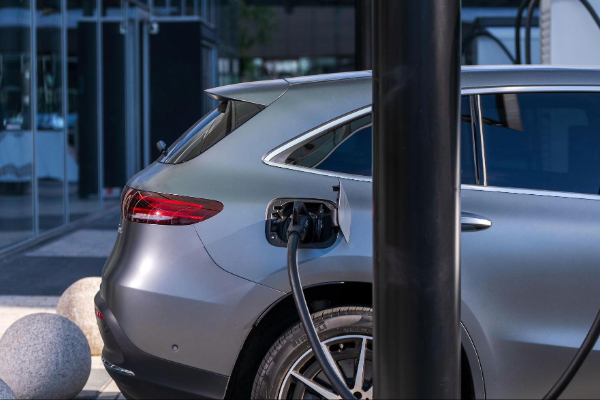
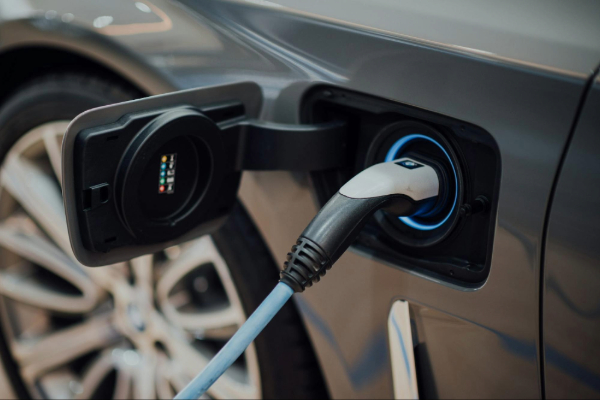
Plugging high-voltage electricity into a vehicle raises natural consumer concerns, but the charging sequence is heavily protected by automated safety handshakes.
Whether using an AC home charger or an ultra-fast DC public station, current never flows on physical plug-in alone. The vehicle and charger communicate instantly:
If a cable is dropped in water or an unexpected electrical surge occurs during a storm, the system terminates power immediately. Thermal sensors in the connector also reduce current if excessive heat builds up at the terminals.
Operating an EV in the Gulf demands hardware capable of withstanding intense summer heat as well as sudden winter rainstorms.
Ambient summer temperatures exceeding 45°C stress any mechanical assembly. To prevent premature wear, modern EVs utilize active liquid-glycol cooling circuits. These systems circulate coolant through battery chillers, keeping cells within their ideal 25°C to 35°C operating window regardless of desert heat.
Seasonal downpours occasionally bring heavy rain and localized street flooding. Drivers often ask: will standing water cause electrocution?
The answer is no. EV drivetrains and battery casings carry IP67 or IP69K ingress ratings, meaning they are hermetically sealed and rigorously submersion-tested by vehicle manufacturers. An EV has no air intake, making it less vulnerable to shallow standing water than an internal combustion car, which risks engine hydro-lock if water enters the cylinders. Furthermore, the metallic chassis acts as a Faraday cage, channeling lightning strikes safely into the ground.
In severe crashes, an EV’s layout provides distinct mechanical advantages:
When shopping for an EV in the UAE market, prioritize these criteria:
Beyond safety, understanding the advantages of electric cars in the UAE can help you weigh the benefits of switching to an EV. If you’re comparing models, see our guide to the best electric cars to consider to find options that suit your needs.
Addressing common misconceptions with engineering facts helps drivers evaluate vehicle safety realistically.
No. Rumors that electric cars explode or that dangerous explosions occur regularly are unfounded. Punctured battery cells can generate smoke and flames, but they do not detonate like pressurized fuel tanks. Thermal runaway develops progressively, giving occupants time to exit safely.
No. High-voltage wiring is heavily insulated, shielded, and brightly color-coded in orange. High-voltage lines remain isolated from the chassis. While drivers should never tamper with damaged orange cables, normal driving, washing, and charging present zero shock hazards.
Standard wet-weather driving and car washes are entirely safe. However, like any road vehicle, EVs should never be driven into deep, fast-flowing floodwaters. Submerging a car past its floorboards can float the chassis, wash the vehicle away, or ruin interior electronics.
Simple habits maximize driving safety and vehicle longevity:
Reading crash-test scores is informative, but experiencing an EV firsthand delivers real confidence. Renting allows you to test smooth acceleration, quiet cabin comfort, and everyday charging logistics without a long-term commitment.
Wondering whether renting is the right choice for you? Read our guide on whether renting a car in Dubai is worth it.
Through Hertz UAE, drivers can access a modern fleet of electric models:
Renting lets you experience modern EV safety, responsive handling, and advanced driver assistance in everyday driving.
Yes. EVs produce zero tailpipe emissions, directly improving urban air quality. Electromagnetic fields from EV motors are heavily shielded and well below World Health Organization safety limits.
While battery fires can happen under severe damage or internal short circuits, they occur far less frequently than fires in petrol or diesel vehicles. Heavy structural armor and digital battery management systems keep battery fires statistically rare.
Yes. Certified home chargers include dedicated circuit breakers and safety protocols. The cable remains unpowered until securely locked into the vehicle port, preventing electrical hazards.
Modern EVs handle extreme desert temperatures reliably. Active liquid-glycol cooling circuits regulate cell temperatures continuously, preventing overheating even in 50°C UAE summers.
Yes. Drivetrains, charging connections, and battery packs are hermetically sealed against water ingress. Driving in rainfall, hitting puddles, or running through automatic car washes carries zero risk of shock.
Yes. Below 20 km/h, mandatory Acoustic Vehicle Alerting Systems (AVAS) emit an audible hum to alert nearby pedestrians. Furthermore, forward-facing cameras and radar activate automatic emergency braking if an obstacle is detected.