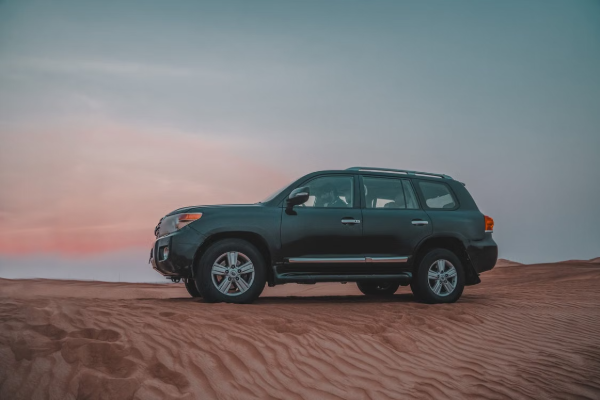
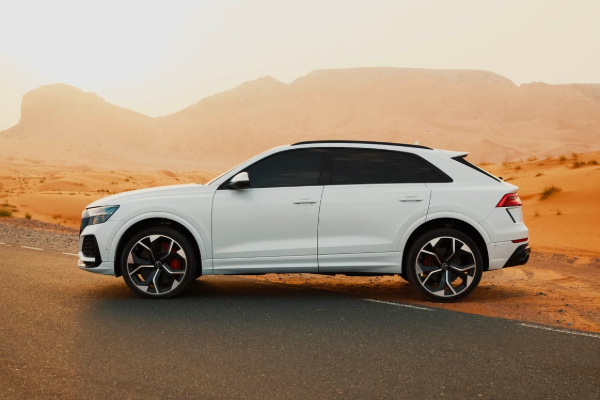
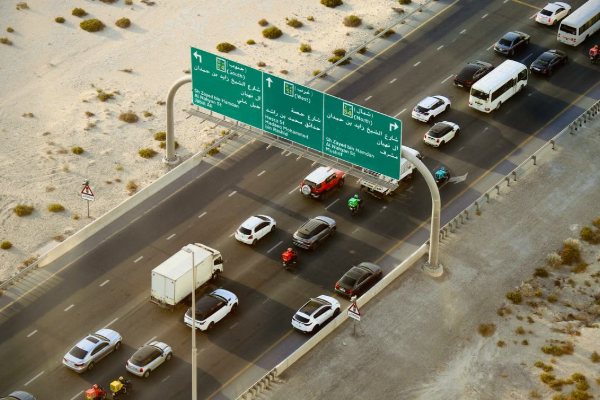
If you’ve spent any time on the roads in Dubai or Abu Dhabi, you’ve noticed they are everywhere. From sleek city crossovers to massive desert-ready rigs, these vehicles dominate the landscape. But what is the actual SUV meaning, and why has this specific vehicle type become the go-to choice for so many drivers?
Whether you’re planning a family road trip or looking for a comfortable airport pickup, understanding the meaning of SUV helps you choose the right ride. In short, these vehicles combine the best parts of a passenger car with the toughness of off-road vehicles. They offer more space, a higher view of the road, and the flexibility to handle everything from a mall run to a highway cruise.
The term SUV stands for Sports Utility Vehicle. Originally, these were rugged machines primarily designed for work and utility. They often shared a chassis with trucks to ensure they could handle heavy loads and rough terrain. Today, the category has evolved into a versatile family car that balances comfort with capability.
An SUV is a vehicle that sits higher off the ground than a standard sedan or station wagon. It features a "two-box" design, one box for the engine compartment and a larger second box for the passengers and cargo. This layout provides extra space and a sense of security that many drivers prefer.
Several specific features set SUV cars apart from other types of passenger vehicles, like hatchbacks or coupes. These characteristics are exactly what make them so popular in the automotive market.
One of the first things you'll notice is the elevated seat. This gives you a commanding view of the road ahead. In heavy traffic, being able to see over the cars in front of you adds a layer of confidence and visibility.
Ground clearance refers to the distance between the bottom of the vehicle and the road. SUVs have more of it, which is incredibly practical in the UAE. It helps you clear speed bumps smoothly and navigate uneven surfaces without worrying about damaging the underbody.
Most SUVs offer five to seven seats. Because they are taller than a sedan, you get more headroom and legroom. Many models allow you to fold the rear seats down, creating a massive flat area for larger items.
The boot space in an SUV is generally much larger and taller than a standard car's trunk. It’s perfect for strollers, golf clubs, or a full set of luggage for a family trip to the airport.
Not all SUVs are the same size. Depending on your needs, you can choose from several sub-categories.
Compact SUVs, like the Kia Seltos, are perfect for city life. They are small enough to park easily in tight spots but still give you that raised driving feel. They offer great practicality without the bulk of a large SUV.
Models like the Kia Sportage or Sorento fall into this group. They offer a great balance of performance and space. They’re large enough for a family of five but still feel nimble on the highway.
These are the giants of the road. They often feature three rows of seats and significant towing power. If you have a large family or need to move a lot of gear, a full-size model is the way to go.
A newer trend in SUV styling is the coupe SUV. These have a sporty sloping roofline. They combine the high-riding height of a utility vehicle with the sleek look of a sports car.
Modern SUVs are built for daily life. They aren't just for mountains and mud anymore. Engineers design them to be as smooth and quiet as a luxury sedan. In the UAE, they are excellent for long commutes between Emirates because they feel stable at higher speeds. They also handle the heat well, often featuring powerful air conditioning systems to keep the large cabin cool.
The popularity of SUVs in this region isn't a coincidence. Our roads are wide, and our trips are often long. Drivers value the road presence and visibility that a larger vehicle provides. For families, the ability to fit everyone comfortably while having enough space for a desert picnic or a beach day is a huge plus.
The growing popularity of SUVs can also be seen in global vehicle sales. In 2016, SUV sales surpassed traditional car sales by more than 3 million units, while SUVs contributed to a 22% increase in worldwide vehicle sales that year. Their global market share continued to grow, reaching around 40% by the end of 2019. In the United States, SUVs accounted for 47.4% of vehicle sales in 2019.
This trend has continued into more recent years. SUVs accounted for 49.6% of new light-duty vehicle sales in 2024, showing how significant the category has become in the wider automotive market. Growth has also varied by country. For example, SUV sales in Thailand increased by 56.4% between 2014 and 2015.
The variety of SUV cars in the UAE means there is a model for every budget, from budget-friendly crossovers to high-end luxury icons.
SUV safety depends on the vehicle's design, safety features, driving conditions, and how it is used. Their larger size and elevated driving position can provide drivers with greater visibility, while modern models can include features such as airbags, electronic stability control, collision warning systems, and automatic emergency braking.
However, the higher centre of gravity found in many SUVs can also affect their handling. Historical safety data has shown that SUVs were around 2.5 times more likely to roll over than cars, particularly in earlier generations of these vehicles. Rollovers accounted for more than 30% of occupant fatalities in 2001. At the same time, SUVs have recorded the lowest driver death rate among vehicle types in some historical datasets, showing why SUV safety should be considered across several factors rather than based on size alone.
Historical collision data also highlighted risks for other road users. In 2000–2001, SUVs were involved in around 60% of fatal side-impact collisions, while some studies reported that children were substantially more likely to be killed in collisions involving SUVs. Modern vehicle design and safety technology have continued to evolve since these figures were recorded, so they should be viewed as historical context rather than current crash-rate measurements.
While the SUV's meaning includes "utility," not every model is an off-road beast. Some are crossovers, which use a car-like body and are primarily designed for paved roads. If you want to go dune bashing, you need a vehicle equipped with Four Wheel Drive (4WD) and specific off-road capabilities. However, even a standard SUV offers enough ground clearance and grip for light off-road paths or gravel tracks.
If you want zero tailpipe emissions, you now have plenty of options. Electric SUVs are becoming a major part of the market. They use electric power to provide instant torque and a very quiet ride. Brands are launching more electric models every year, offering a great range that makes them practical for both city driving and longer trips.
A hybrid car combines a petrol engine with an electric motor. This setup improves efficiency in city traffic, where the electric motor does most of the work. If you’re considering a hybrid SUV, explore some of the best hybrid SUVs available in the UAE.
These have a larger battery that you can charge at a station. You can often drive 40-50 kilometers on pure electricity before the gas engine kicks in.
Choosing an SUV depends on your lifestyle. If you frequently carry more than two passengers or have a lot of hobbies that require gear, it’s a smart move. If you value a high seating position and want a vehicle that can handle a variety of road conditions with ease, you’ll likely prefer an SUV over a traditional sedan.
The best way to see if an SUV fits your life is to get behind the wheel. At Hertz UAE, we offer a wide range of SUVs, from the nimble Kia Seltos to spacious family favorites. Renting an SUV for a few days or a week lets you test the cargo space, see how it fits in your parking spot, and experience the comfort firsthand. Whether you need a premium ride for business or a tough vehicle for a family road trip, we have the right vehicle class ready for you.
Yes. Many modern SUVs are designed with city life in mind. Compact models are especially easy to park and offer great visibility in tight traffic.
Absolutely. SUVs are perfectly suited for the UAE’s wide highways and city streets. Their high ground clearance is also helpful for navigating speed bumps and occasional sand on the road.
SUV stands for Sports Utility Vehicle. XUV is a marketing term used by some brands (like Mahindra) to mean "Extreme Utility Vehicle," but they generally function the same as a standard SUV.
Look for a tall body, high ground clearance, and a hatchback-style rear door. They look more rugged and sit much higher than a sedan.
Yes, they are among the most popular family cars in the world. They offer the safety, seating capacity, and storage space that modern families need.