Electric car efficiency measures how much distance a vehicle can deliver from each kilowatt-hour (kWh) of electricity it uses. With electric motors converting more stored energy into motion than combustion engines, EVs make better use of every kWh for more efficient, energy-conscious everyday driving.
For electric car drivers, better efficiency can mean more miles between charges, lower running costs and smoother, simpler journey planning. From daily drives to longer road trips, knowing how your EV uses energy can help you make every charge count. This guide from Hertz UAE breaks down what shapes EV range, compares different models and shares smart ways to maximize electric car efficiency on UAE roads.
In simple terms, efficiency tells you the distance an electric vehicle can go on a fixed amount of energy. Instead of miles per gallon, EVs are usually rated in kWh/100 km or kilometers per kWh. A kWh is simply a unit of electricity, the same one shown on your DEWA bill.
The more distance a car gets from each kWh, the more efficient and cheaper it is to run. This matters because two EVs can have the same battery size but very different ranges. Efficiency is about how effectively the car uses its stored energy, not simply how large the battery is.
A battery electric vehicle also avoids the combustion losses found in a traditional gas car, which helps explain its efficiency advantage.
Manufacturers use the WLTP (Worldwide Harmonized Light Vehicle Test Procedure), a standardized test covering city, suburban, and highway driving. The key figures are:
Battery capacity tells you how much energy the vehicle stores. Energy consumption tells you how quickly it uses that energy. Range is the result of the two.
A bigger battery can provide more range, but it does not automatically make a car more efficient. It is better to think about battery size in the same way you would consider fuel-tank size in a petrol car.
As a rough benchmark for real-world driving:
| Rating | kWh per 100 km | Miles per kWh | Typical vehicle type |
| Efficient | 12–14 kWh/100 km | 4.5+ mi/kWh | Compact hatchbacks, aerodynamic sedans |
| Average | 14–17 kWh/100 km | 3.5–4.5 mi/kWh | Mid-size SUVs, family cars |
| Less efficient | 18+ kWh/100 km | Below 3.5 mi/kWh | Large, heavy, or high-performance EVs |
Smaller cars generally achieve better figures because they weigh less and create less aerodynamic drag. That does not make larger EVs a poor choice. It simply means they need more energy to move.
You can calculate efficiency without relying only on manufacturer figures:
Driving range ÷ battery capacity (kWh) = km per kWh
For example, an EV with a 420 km WLTP range and a 60.5 kWh battery achieves 420 ÷ 60.5 = 6.9 km per kWh, or about 4.3 miles per kWh.
The higher the number, the more efficient the car. For kWh/100 km, divide battery capacity by range and multiply by 100.
Electric vehicles make more of every charge. Battery EVs use around 87% to 91% of the energy stored in their batteries, while electric motors convert over 85% of that power into motion. In comparison, gasoline vehicles convert only about 16% to 25%, with roughly 80% of fuel energy lost as heat.
That makes EVs roughly three times more efficient than gas cars. Regenerative braking adds another benefit by capturing energy as the car slows and sending it back to the battery, which is especially useful in stop-and-go traffic.
Along with smarter energy use, electric vehicles typically produce lower lifetime greenhouse-gas emissions than gasoline vehicles, making efficiency a key reason many drivers consider making the switch.
Not all battery energy reaches the wheels. Roughly:
Regenerative braking can recover part of the energy that would otherwise be lost.
Efficiency changes with driving conditions, design, and driving habits.
In the UAE, regular charging with a home charger is generally the cheapest option. Public charging through networks such as DEWA's Green Charger can cost more and may be less convenient, particularly during busy periods or on a road trip.
To put these charging costs into perspective, it helps to compare them with the cost of running a petrol car in the UAE. Special 95 costs AED 3.49 per liter. A typical family sedan using around 8 liters per 100 km costs roughly AED 28 to travel that distance. By comparison, an EV using around 15 kWh/100 km and charged mostly at home can cost considerably less per kilometer.
Electric car drivers should also shop around when comparing insurance and ownership costs. EV insurance can be higher than for petrol cars, so the overall value depends on more than charging costs alone.
Generally, yes. An electric SUV moves more mass and usually creates more aerodynamic drag than a compact hatchback or sedan.
Manufacturers often use larger batteries to compensate, giving an SUV more range even if its efficiency is lower. A well-equipped electric SUV can still be a practical choice for families, especially when space, comfort, seats, and boot space matter more than achieving the lowest possible consumption.
The trade-off is that buyers may be paying extra for size, practicality, and higher equipment levels rather than efficiency alone.
A few habits can help you get more from every charge:
If you’re comparing EVs for range, running costs and real-world value, this shortlist covers several models available for sale in the UAE market, from practical SUVs to premium sedans. Beyond these local picks, the wider EV market shows just how far battery technology has come. The Lucid Air Grand Touring, for example, leads the pack with up to 512 miles on one charge, setting a strong standard for the future of long-range electric driving.
| Model | Battery | WLTP Range | Approx. Efficiency | Body Type |
| BYD ATTO 3 | 60.5 kWh | 420 km | ~6.9 km/kWh | Compact SUV |
| Polestar 2 Long Range | 82 kWh | Up to 635 km | ~7.7 km/kWh | Executive sedan |
| BYD HAN | 85.4 kWh | 550+ km | ~6.4 km/kWh | Flagship sedan |
| BYD Sealion 7 RWD | 82.5 kWh | 482 km | ~5.8 km/kWh | Mid-size SUV |
Efficiency figures are calculated from published WLTP range and battery capacity, making it easier to compare each car’s capacity, consumption and cruising potential.
UAE conditions can affect efficiency differently from European WLTP testing. Summer temperatures regularly exceed 45°C, so air conditioning can use a significant amount of battery power.
Heavy traffic on roads such as Sheikh Zayed Road brings frequent stops and starts, but regenerative braking helps recover some energy. The growing DEWA EV Green Charger network also makes public charging more accessible across Dubai, although availability can vary by location and timing. Abu Dhabi's network is expanding in the same way.
For most drivers, convenient daily charging at home or work can matter more than choosing the EV with the highest headline range. An efficient car with reliable charging access may offer better value than simply choosing the model with the biggest battery.
Compare EVs by looking beyond headline range:
The best way to see how an EV handles UAE roads is to get behind the wheel. With simpler systems and smarter energy use, electric vehicles offer high efficiency, while internal combustion engines lose significant energy as waste heat. With the average new EV offering close to 300 miles of range, daily drives are becoming easier to manage.
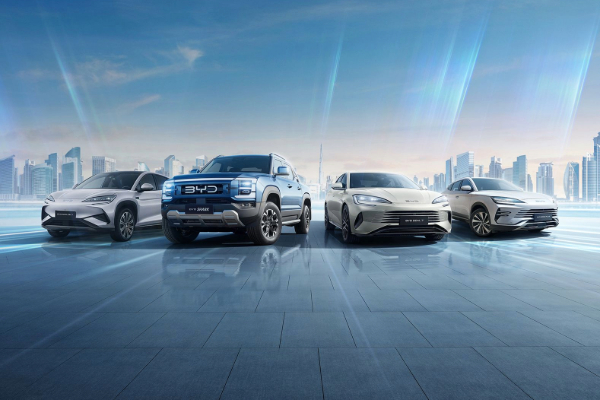
Hertz UAE’s EV lineup lets you drive, discover and decide, from the BYD ATTO 3 for city cruising to the BYD HAN for executive trips and the Polestar 2 through the Drive Green package.
Renting gives you a real feel for range, recharging and ride quality, plus cabin comfort, without committing to a purchase. Try an EV for your daily drive or next road trip, and contact us to find the right electric rental for your route.
In the UAE and GCC, BYD models like the ATTO 3 pair smart systems and smooth performance with efficient everyday driving. Globally, the Hyundai Ioniq 6 combines aerodynamic design and exceptional efficiency, while the Dacia Spring stands out for its compact construction and city-friendly efficiency.
It depends on the model and battery size, but efficient EVs can typically offer around 200–400 miles, or roughly 320–640 km, on a full charge. Smaller models can achieve strong efficiency with smaller batteries, while larger SUVs usually need more energy to cover the same distance.
Regenerative braking uses the electric motor as a generator when you slow down. It converts some kinetic energy back into electricity instead of losing it as heat. This is especially useful in stop-start city driving.
Yes. An EV's climate control draws power directly from the battery, so heavy AC use in UAE summer can reduce real-world range. Pre-cooling the cabin while plugged in can help.
Generally, yes. Larger and heavier vehicles need more energy to move. Manufacturers often compensate with a bigger battery, which can provide more range without making the vehicle more efficient.
Yes. Aerodynamic drag increases at higher speeds, so driving at 140 km/h uses noticeably more energy per kilometer than maintaining 100–110 km/h. On long journeys, this can mean needing an additional charging stop.